

Key Takeaways:
- The Grayscale recommends that crypto must move promptly since the development of quantum computing could hit its high gear a lot faster.
- New research lowers the estimated barrier to breaking encryption to around 1,200–1,450 qubits.
- Bitcoin’s biggest obstacle is community consensus, not engineering limitations, in a quantum shift.
Quantum computing is no longer a distant risk for crypto. While no immediate threat exists, industry leaders warn the window to prepare may be shorter than expected.
Grayscale Sounds Alarm on Quantum Readiness
Grayscale’s head of research, Zach Pandl, is calling for faster action across the crypto sector. His caution has been issued amid new discoveries made at Google Quantum AI which indicated that it is still uncertain when strong quantum machines will be developed.

It is not the ability today, but what will happen tomorrow. Quantum progress might not be a straight line. Rather, breakthroughs might come in uncertain steps that would take unsuspecting systems by surprise.
It is estimated that it would require approximately 1,200 -1,450 logical qubits to break fairly common cryptographic systems. This is a smaller figure than a range of previous estimates, which increases the urgency in blockchain circles.
Read More: Grayscale Files $8.6B HYPE ETF (GHYP)
Post-Quantum Tools Already in Motion
Quantum-resistance conversion to security is not a dream. Post-quantum cryptography is already in existence and it is under testing in the real world.
There are early movers in some blockchain ecosystems. Quantum-resistant techniques are already being tried or implemented by networks such as Solana and the XRP Ledger. These attempts indicate that system cryptography can be advanced, but without difficulty.
Switching to new cryptography has more than impacts on security. It may affect the speed of transaction, efficiency of the network and the general design. That explains why early coordination is essential in case of decentralized systems, where societal consensus should be sought.
Read More: Ripple-Linked Hidden Road Hits NSCC Directory, $3T Flow Eyes XRPL Shift

Risk Exposure Varies Across Blockchains
All crypto networks do not have quantum risk that is distributed equally. Bitcoin, a UTXO-based system with a proof-of-work, possesses design strengths that lessen some attack surfaces. The same can be said about Ethereum and other account-based systems that might become exposed in the way keys and transactions are managed.
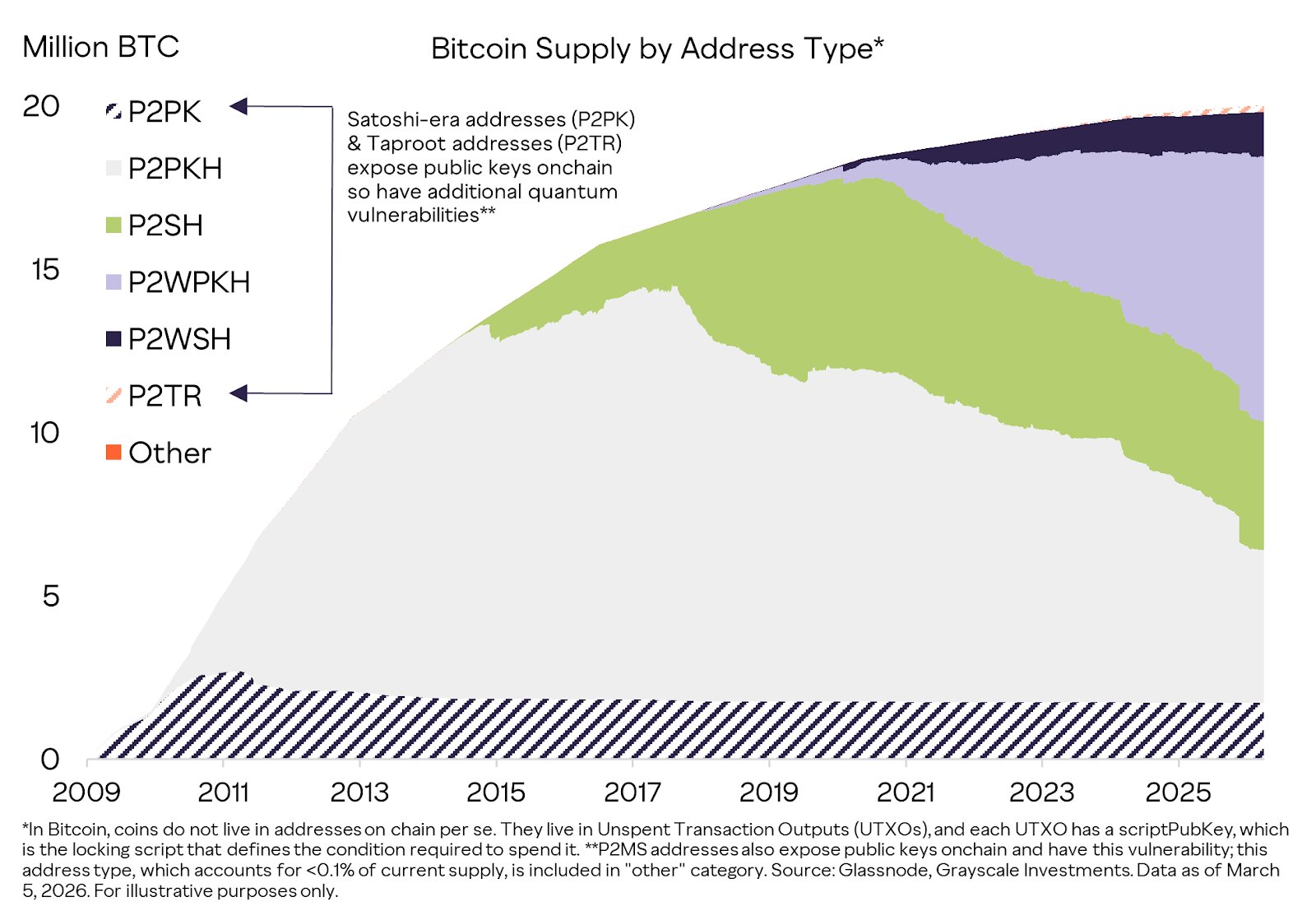
All other elements also have an impact, such as the block timing, the complexity of smart contracts, and network architecture. These variations imply that every blockchain needs to develop its quantum resistance methodology.
Technically, Bitcoin is quite robust. But it faces its greatest obstacle in decision-making.
It is not easy to attain consensus. Formal protocol changes are not new to Bitcoin, and these toys of contention may delay quantum-based upgrades..
A Race to Prepare, Not Panic
Today, blockchain security is not at risk. But the direction is clear. Every system that relies on cryptography from finance to government is beginning to plan for a post-quantum world.
Public blockchains face a unique constraint: no central authority to enforce upgrades. Judicial transformation is mandatory on the international development-validating-user platforms.

